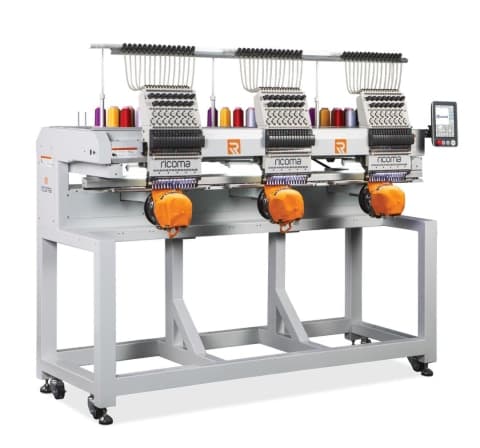
A two-head, 11-needle embroidery machine typically has two independent embroidery heads, each capable of holding 11 different colored threads, allowing for simultaneous embroidery of two identical designs or two different designs using up to 11 colors each. These machines are commonly used for industrial or commercial purposes due to their higher production capacity compared to single-head machines.
Here's a more detailed breakdown of the specifications:
General Specifications:
Heads:
Two, meaning it has two independent embroidery units that can operate simultaneously.
Needles:
11 needles per head, allowing for up to 11 different color changes in a design per head.
Maximum Speed:
Typically ranges from 850 to 1200 stitches per minute (SPM), depending on the specific model and design.
Embroidery Area:
Varies by machine, but common sizes are 400x500mm or 500x400mm.
Computer System:
Often features a touch screen control panel with a user-friendly interface, supporting various languages, and allowing for design storage.
Automatic Features:
Includes automatic thread trimming, thread break detection, and bobbin winding.
Key Features:
Versatility:
Capable of embroidering on various materials, including flat fabrics, caps, and finished garments.
Increased Production:
The two-head design allows for increased production output compared to single-head machines.
Design Compatibility:
Can handle a wide range of embroidery file formats and often comes with built-in fonts and designs.
User-Friendly:
Designed with ease of operation in mind, often featuring intuitive interfaces and clear instructions.
Reliability:
Industrial-grade construction ensures durability and consistent performance.
Considerations:
Needle Selection:
While 75/11 needles are common, you may need to adjust needle size based on fabric thickness and thread type.
Frame Size:
Ensure the machine's embroidery area is compatible with the sizes of your projects.
Maintenance:
Regular maintenance, including oiling and cleaning, is crucial for optimal performance.
Software Compatibility:
Ensure the machine's software is compatible with your design creation software.